Hiển thị các bài đăng có nhãn Literature. Hiển thị tất cả bài đăng
Hiển thị các bài đăng có nhãn Literature. Hiển thị tất cả bài đăng
Thứ Tư, 12 tháng 8, 2015
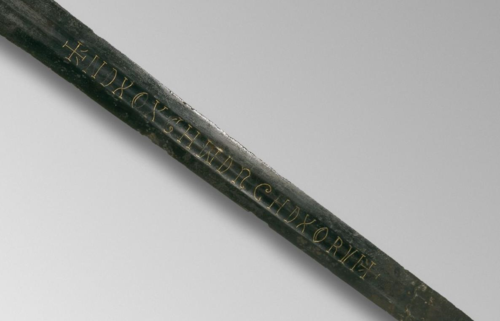
What does +NDXOXCHWDRGHDXORVI+ mean?
The British Library is looking for help trying to solve an inscription on a medieval sword...

Thứ Tư, 22 tháng 10, 2014
Damsels, Tree Bark and York/Jorvik: Medieval News Roundup
This week's roundup finds some stories on how York is promoting its connection to its Viking past, wonderful images of writing on tree bark from medieval Novgorod and the troubles of being a historian in Cambodia.


Chủ Nhật, 5 tháng 10, 2014
Pirates, Doodles and Sinking Castles - Medieval News Roundup
This week's collection of news and tweets for medievalists.


Thứ Năm, 10 tháng 4, 2014
What does a medieval literature scholar see in 'Game of Thrones?'
From PBS Newshour: Brantley Bryant, associate professor of medieval literature at Sonoma State University, shares what he sees of The Canterbury Tales, the Morte d'Arthur and Beowulf in HBO's "Game of Thrones."

Thứ Hai, 15 tháng 4, 2013
The 101 Nights - new book of Arabic tales discovered
A historian in Germany has come across a new collection of medieval Arabic stories - a kind of precursor to the famous book known as One Thousand and One Nights. Claudia Ott, a professor at the University of Erlangen-Nuremberg, discovered The Book with the Story of the 101 Nights in a 13th century Andalusia manuscript.

The 101 Nights contains 17 stories, two of which can also be found in the 1001 Nights, with most set in India. Ott adds, “It is certainly not by chance that this backdrop has something Oriental about it when seen from an Arabic perspective. It is an image of an Orient that is far away, unfamiliar and exotic — for this reason, particularly attractive."
Ott first saw the manuscript on display at a museum in Berlin, and when she had the chance to look at, soon discovered its importance. She has translated the work into German.
You can read more about this discovery from the Egypt Independent

The 101 Nights contains 17 stories, two of which can also be found in the 1001 Nights, with most set in India. Ott adds, “It is certainly not by chance that this backdrop has something Oriental about it when seen from an Arabic perspective. It is an image of an Orient that is far away, unfamiliar and exotic — for this reason, particularly attractive."
Ott first saw the manuscript on display at a museum in Berlin, and when she had the chance to look at, soon discovered its importance. She has translated the work into German.
You can read more about this discovery from the Egypt Independent
Thứ Tư, 30 tháng 1, 2013
When Newspapers Were New, or, How Londoners Got Word of the Plague

The plague was abroad. Londoners knew not where it had come from, only that it was upon Holland. "It was brought, some said from Italy, others from the Levant, among some goods which were brought home by their Turkey fleet; others said it was brought from Candia; others from Cyprus," Daniel Defoe wrote in the opening of his historical novel, A Journal of the Plague Year.
The book, which many read as something like non-fiction, bore the webby subtitle, being observations or memorials of the most remarkable occurrences, as well public as private, which happened in London during the last great visitation in 1665, and bore stamps of authenticity -- it was "Written by a citizen who remained all the while in London" -- and intrigue, having "Never [been] made public before."
Which, as a journalist of the web era, made me think: that Defoe knew how to gin up some pageviews! And in fact, Defoe did. (If you can't see the translation to the headline argot du jour, allow me: 73 Amazing and Horrible Things That Happened During the Plague, From Someone Who Saw Them With His Own Two Eyes. And no, I didn't count. But the point is: no one's counting.)
Click here to read this article from The Atlantic
Đăng ký:
Bài đăng (Atom)